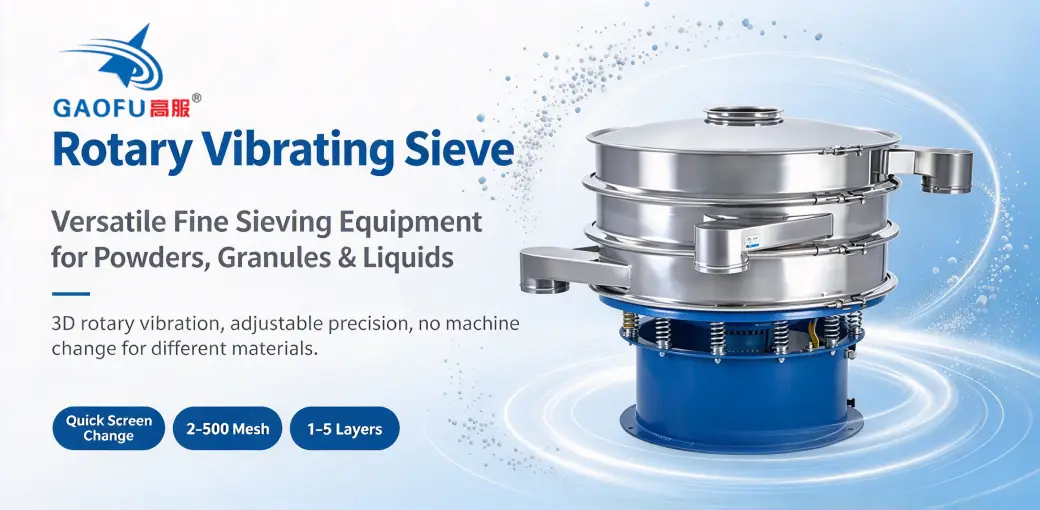
Over 10,000+ customers' choice, Focus on screening industry 40+ years
Screen blinding in catalyst powder processing is not necessarily caused by an unsuitable mesh size alone. Material characteristics and operating conditions also play important roles.
Moisture-related agglomeration
Some powder materials are hygroscopic. Changes in ambient humidity or material moisture content may increase particle adhesion, causing fine particles to form loose agglomerates that are more difficult to disperse.
Static electricity
Fine particles may accumulate static electricity during conveying, friction, and screening. This can cause powder to adhere to the screen surface or screen frame, interfering with normal particle passage.
Interparticle forces
When particle sizes are very small, the relatively large specific surface area can make particle adhesion more noticeable. Loose agglomerates may not disperse sufficiently under ordinary vibration conditions.
Mismatch between screen specifications and feeding conditions
If the screen aperture does not match the target particle size or material flow characteristics, or if the feed rate is too high, material may accumulate in localized areas of the screen. This increases the possibility of particles covering or blocking the mesh openings.
For this reason, addressing screen blinding requires a combined evaluation of material properties, screen structure, feeding conditions, and cleaning methods. Simply increasing vibration intensity or selecting a finer mesh is not always the right solution.
Screen mesh specification is an important factor when selecting a rotary vibratory sieve. Depending on the equipment model and process requirements, Gaofu Machinery can evaluate screen configurations within a commonly considered range of 2–500 mesh. The actual available specifications depend on the machine model, screen material, and final configuration.
Different mesh counts correspond to different aperture sizes, so screen selection should be based on the target particle size and separation requirements.
Oversized particle removal: Relatively large screen apertures can be selected to separate particles exceeding the required size range.
Medium and fine powder classification: Screen apertures can be matched to the target particle size range to separate different fractions.
Fine powder screening with high-mesh screens: For fine catalyst powders, screen aperture, material flowability, and screen-cleaning methods require particular attention to reduce the risk of particle accumulation and restricted passage.
It is important to note that a higher mesh count does not automatically produce better screening results. Actual aperture size, wire diameter, screen standards, and material particle size all influence performance. Both mesh count and aperture dimensions should be confirmed during equipment selection.
For fine powder applications, screening equipment needs suitable material movement conditions and, where necessary, an appropriate auxiliary screen-cleaning configuration.
A rotary vibratory sieve uses a vibration motor to generate excitation force, producing three-dimensional movement of the screen body. This motion helps material spread, move, and stratify across the screen surface, creating conditions for particle separation.
For catalyst fine powders, vibration parameters can be selected according to particle size, bulk density, and flowability. Relevant factors include vibration motor power, excitation force, frequency, and amplitude.
A suitable combination of operating parameters can help improve material distribution and reduce localized accumulation.
However, stronger vibration is not always better. For some brittle catalyst materials, excessive mechanical action may increase particle abrasion and fines generation. Screen-cleaning requirements and particle integrity should therefore be considered together.
For high-mesh screens or fine powders that are prone to screen blinding, auxiliary cleaning systems such as bouncing balls or ultrasonic screen cleaning systems may be considered according to the application.
Bouncing ball screen cleaning
Bouncing balls installed beneath the screen mesh move during operation and provide repeated mechanical contact with the screen. This can help dislodge certain particles that remain on the screen surface.
Ultrasonic screen cleaning
An ultrasonic system transmits high-frequency vibration to the screen mesh. It can help reduce particle adhesion and blockage around the apertures in certain fine powder screening applications.
These two methods work differently and are suitable for different operating conditions. Selection should take into account particle size, adhesion characteristics, screen specifications, and equipment structure.
Auxiliary cleaning systems can help alleviate certain screen-blinding problems, but they cannot guarantee blockage-free operation under all material and operating conditions.
Consistent feeding is another important factor in fine powder screening. If too much material enters the machine within a short period, a thick material layer may form on the screen surface, reducing the opportunity for particles to contact and pass through the apertures.
By coordinating the upstream feeding equipment, inlet design, and effective screening area, material distribution across the screen can be improved.
For catalyst powders with poor flowability or a tendency to agglomerate, material conditioning and storage conditions should also be evaluated as part of the overall process.
When configuring a rotary vibratory sieve for catalyst powder, Gaofu Machinery evaluates the relationship between target particle size, material characteristics, and production conditions.
Screen mesh specifications
Screen configurations within the 2–500 mesh range may be evaluated according to the machine model and process requirements. Actual aperture size, wire diameter, screen material, and tensioning method should also be confirmed.
Screen diameter
The screen diameter should be selected according to the required throughput, material bulk density, and available installation space. The effective screening area is also an important consideration.
Vibration system
Key parameters include vibration motor power, excitation force, frequency, and amplitude. These should be matched to the characteristics of the fine powder rather than selected independently.
Number of screen layers
Single-layer or multi-layer configurations can be considered according to whether the process requires one separation stage or classification into multiple particle size fractions.
Screen-cleaning configuration
Depending on the cause of screen blinding, bouncing balls or ultrasonic screen cleaning systems may be evaluated. Their compatibility with the screen specifications and equipment structure should be confirmed.
Product-contact materials and sealing
Screen mesh, screen frames, and other product-contact components should be evaluated according to catalyst corrosiveness, abrasiveness, toxicity, and powder characteristics. Equipment sealing and feeding and discharge connections should also be selected according to site requirements.
These parameters need to work together. For example, a high-mesh screen may provide the required fine separation, but it can also make particle passage more challenging. If moisture or static electricity is also present, additional evaluation of screen cleaning and feeding conditions may be necessary.
Different catalyst types and formulations can have significantly different agglomeration tendencies, particle strengths, and screening characteristics. Gaofu Machinery recommends providing actual material samples and relevant process information before finalizing the equipment configuration.
Important information includes:
Raw material particle size range and target screening mesh.
Whether the powder is prone to moisture absorption, static electricity, or agglomeration.
Required processing capacity and production line operating conditions.
Whether multi-fraction classification or separate fines collection is required.
Special requirements for screen materials, cleaning methods, and equipment maintenance.
Material testing can help evaluate screen passage, blockage behavior, particle size distribution before and after screening, and fines content. Based on the results, screen specifications, vibration parameters, and auxiliary cleaning configurations can be further adjusted.
For catalysts associated with combustible dust hazards, corrosiveness, or toxicity, a professional risk assessment based on the material safety data sheet (SDS) is necessary. An ordinary enclosed rotary vibratory sieve is not inherently explosion-proof or inert-gas protected. Any special protection requirements must be separately assessed and engineered.
Fine catalyst powder screening requires attention not only to target particle size but also to agglomeration, static adhesion, and screen blinding. A Rotary Vibratory Sieve from Gaofu Machinery can be configured according to material characteristics, with screen options within the 2–500 mesh range, suitable vibration parameters, and auxiliary screen-cleaning systems where appropriate.
From screen specification selection and cleaning method evaluation to actual material testing, Gaofu Machinery provides equipment configuration recommendations based on specific production conditions, helping chemical manufacturers improve their catalyst powder screening processes.
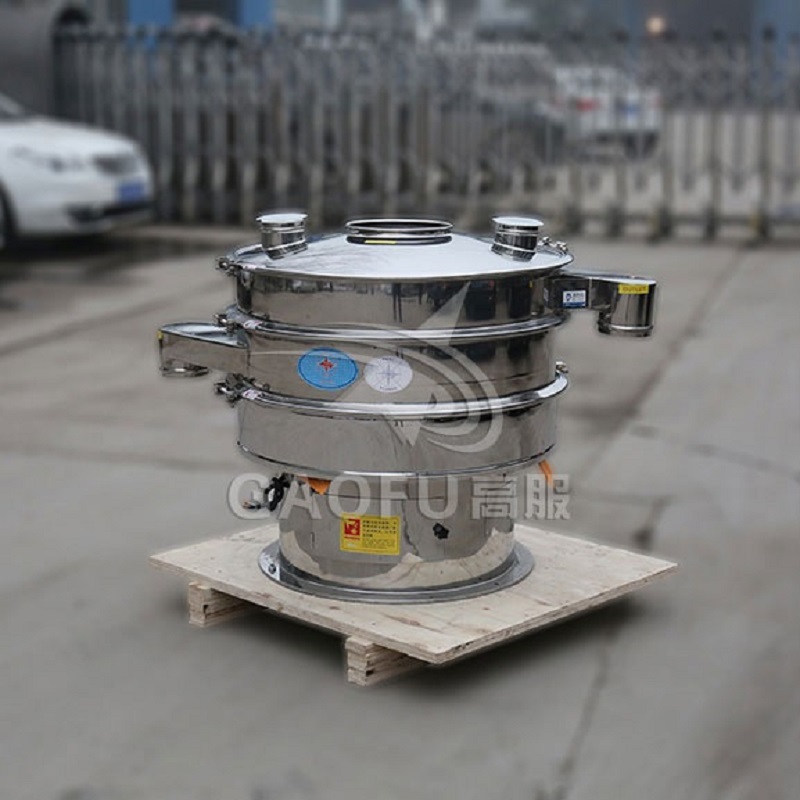
Chemical Industry Client Testimonials
Wanhua Chemical, Yuntianhua Group, Kingfa Science & Technology, Formosa Plastics Group, China Pingmei Shenma Group, Kemai Co., Ltd., Luxi Chemical, Liby Group, Oriental Yuhong, Davco, Chenming Group, Guanhao High-Tech
Kaifei Chemical, Sunsine Chemical, Weilin Co., Ltd., Xuyang Group, 3Trees, Maydos, Loyal Group (Kingpor Group), AkzoNobel, CSSC Hanguang, Haike Group, Nice Group, Taishan Fiberglass, Wanhua, Red Eagle, China XLX Fertiliser (Xinlianxin), CCtech Catalysis, China National Bluestar, Sakura Paint, ITANOS, Yanggu Huatai, Sennics, Longxing Chemical Group, Tunhe Co., Ltd., GHW International, Jianye Chemical, Finehope
Fortune 500 Client Testimonials
CNPC、CSCEC、Sinochem Holdings、CRCC、China Minmetals Corporation、CNOOC、CR、Sinopharm、CHN Energy、COFCO Corporation、Huawei Technologies、PowerChina、CITIC Group、Wuchan Zhongda Group、NORINCO、Chalco、CNBM、 Shaanxi Coal and Chemical Industry Group、Ansteel Group、CETC、CSSC、CASC、CEC、Jinchuan Group、CASIC、Conch Cement、CNNC、SPH、Shanxi Coking Coal Group、 Zhongtai Chemical、GPHL、DEC、Sinosteel Corporation、MCC、China National Salt Industry Chemical、China Baowu Steel Group、China Animal Husbandry Industry Co., Ltd.、CECEP
About Gaofu
Xinxiang Gaofu Machinery Co., Ltd. was founded back in the 1980s. With over 40 years of development, it has been certified as a National-level Specialized, Refined, Unique & Innovative Little Giant Enterprise, National Green Factory, National High-tech Enterprise, and National Intellectual Property Advantage Enterprise, and serves as the President Unit of China Vibration Screening Industry Association.
The company is accredited with the Henan Provincial Industrial Design Center, Henan Provincial Engineering Technology Research Center for Intelligent On-line Screening System, and Xinxiang Municipal Engineering Technology Research Center for Fine Screening.
Gaofu has obtained more than 500 patents including invention patents, utility model patents and design patents, been awarded the Science and Technology Achievement Prize issued by the Ministry of Industry and Information Technology of China, and participated in drafting and formulating 4 national standards.
Gaofu's product portfolio covers multiple series and hundreds of specifications, including vibrating screening equipment, conveying equipment, coal crushing equipment, filtration equipment and automatic material handling systems.
Core products include vibrating screens, screening machines, vibratory sifters, rotary vibrating screens, ultrasonic vibrating screens, linear vibrating screens, airflow screens, gyratory screens, roller screens, dewatering screens, bar screens, vacuum feeding machines, dust-free feeding stations, bulk bag feeding stations, feeding systems, automatic powder feeding systems, automatic slag-discharging filters, leaf filters, clay filters, toothed roll crushers, coal crushers and other machinery.
These products are widely applied in food, pharmaceutical, chemical, metallurgy, construction materials, mining, thermal power, environmental protection and many other industries, winning recognition and trust from over 10,000 clients worldwide.
Gaofu products enjoy strong sales across Greater China, and are exported to more than 100 countries and regions such as Russia, Canada, the United States, New Zealand, Japan, Brazil and South Africa.
Upholding the corporate mission of Improving material quality & efficiency to fully satisfy customer demands, Gaofu maintains long-term partnerships with clients to achieve win-win development.
At present, Gaofu is an official qualified supplier for numerous Fortune Global 500 enterprises, including CNPC, Sinopec, Sinochem Holdings, China Resources Group, Sinopharm Group, COFCO, China National Building Material, China Aerospace Science and Technology Corporation, Jinchuan Group and more.
Gaofu Machinery ranks No.1 in global sales volume of vibrating screens.
In May 2024, Frost & Sullivan, a world-renowned international consulting firm, issued a Market Position Verification Certificate confirming that Gaofu achieved the world's largest shipment volume of vibrating screens in the global market in 2023.