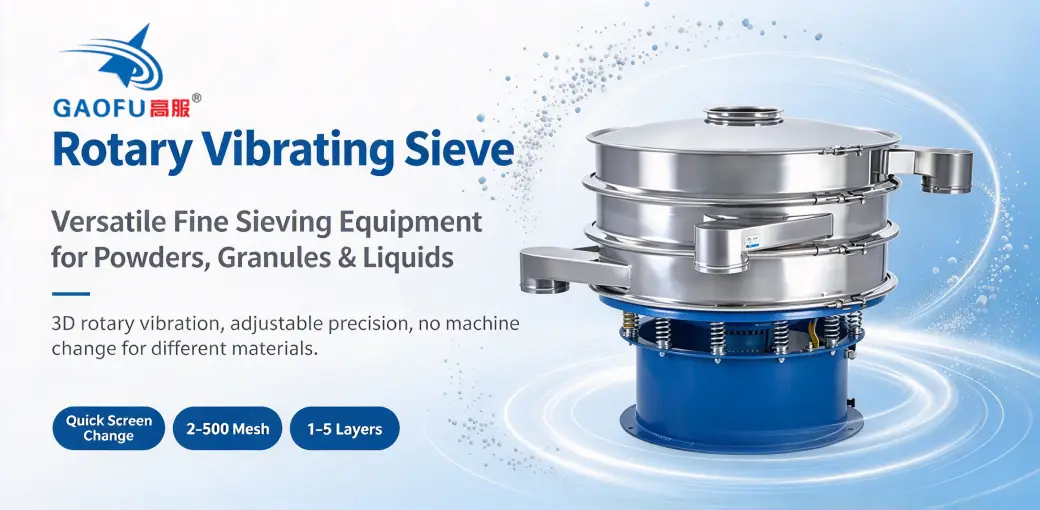
Over 10,000+ customers' choice, Focus on screening industry 40+ years
Dust in plastic processing facilities can originate from several stages of production. For rotary vibratory screening operations, the following areas deserve particular attention.
Material feeding: When plastic powders are transferred from a hopper or conveying system into the screening machine, a large drop height or poorly fitted connections may allow fine particles to escape with the airflow.
Screening operation: During operation, materials are continuously moved by vibration. For fine plastic powders with good flowability, an unsuitable sealing arrangement may allow dust to escape from the equipment.
Material discharge: Screened products and oversize materials need to be discharged separately. If the discharge outlets are not properly connected to downstream equipment, dust may also be generated during material transfer.
Therefore, improving dust control around a screening operation involves more than the screening machine itself. Feeding, screening, discharge, and subsequent conveying processes should all be considered.
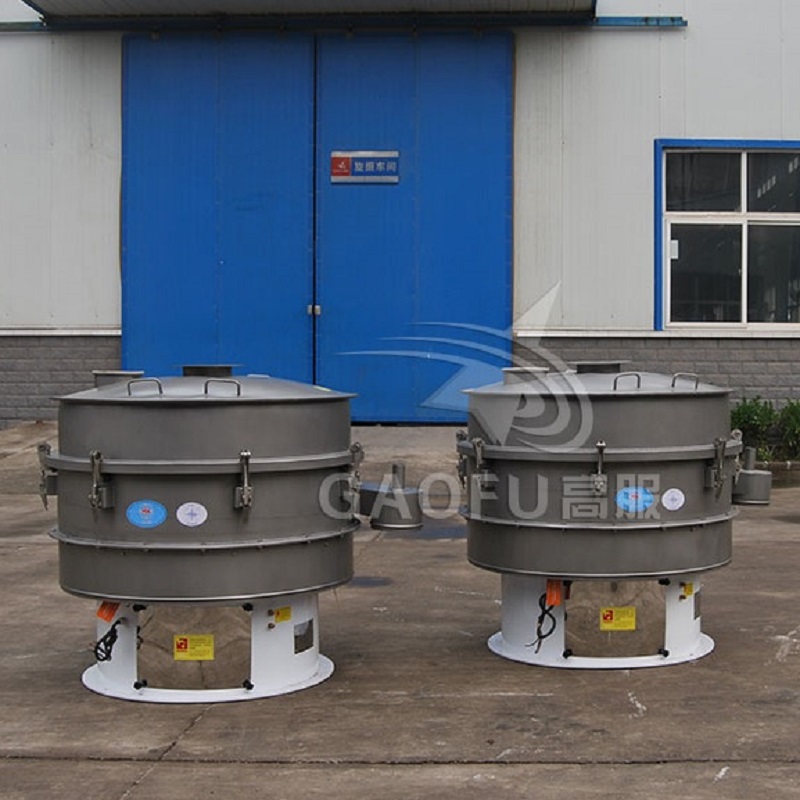
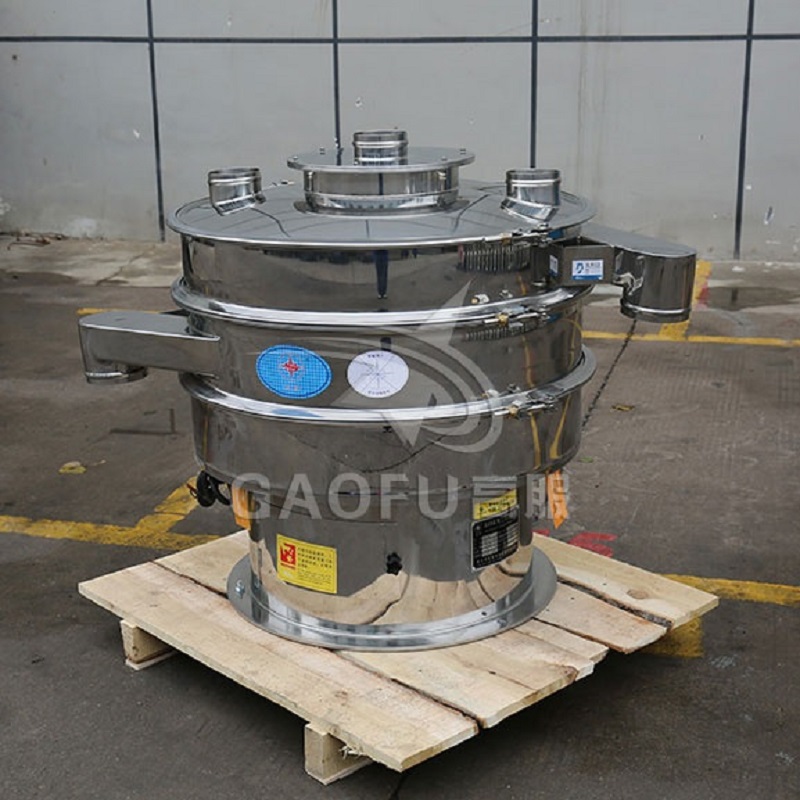
For plastic processing applications, Gaofu Machinery's plastic rotary vibratory sieve can be configured with suitable enclosure and sealing arrangements according to actual operating conditions. By considering the screen body, feed inlet, discharge outlets, and connection points as part of the overall design, the equipment can help reduce material escape during screening.
Compared with open screening arrangements, an enclosed structure provides a more contained space for material handling. It can be suitable for plastic powder and granule applications where maintaining a cleaner production environment is an important consideration.
Several design aspects should be evaluated when configuring the equipment:
Screen body sealing: Select suitable sealing arrangements based on the equipment structure and material characteristics to help reduce dust escaping through joints and connection points.
Feed inlet connections: Match the feed inlet to upstream equipment such as hoppers and screw conveyors. Proper connection design can help minimize material drop height and dust dispersion around the feeding area.
Discharge connections: Configure discharge outlets according to the requirements of different particle size fractions, allowing easier connection to downstream conveying, storage, or packaging equipment.
Optional dust collection connections: For applications with higher dust generation or specific environmental requirements, dust collection ports and compatible extraction systems can be evaluated according to site conditions.
It is important to understand that enclosed screening is primarily intended to reduce material escape. It is not a substitute for a dedicated dust collection system. Where significant dust is generated, ventilation, dust extraction, and the facility's overall environmental control measures should also be considered.
Plastic processing lines typically include several stages, such as feeding, conveying, screening, blending, storage, and packaging. If the screening machine is not properly integrated with upstream and downstream equipment, dust may still escape during material transfer, even when the machine itself has an enclosed structure.
For this reason, rotary vibratory sieve selection should consider the entire production process rather than screening performance alone.
For example, in plastic powder production, the feed inlet of the rotary vibratory sieve can be connected to upstream feeding equipment according to the material flow. After screening, different particle size fractions can be directed through their respective outlets to storage hoppers or subsequent processing stages.
In plastic recycling applications, the connections between crushing, conveying, and screening equipment can also be arranged according to the handling requirements of crushed plastic and pulverized materials.
A well-planned equipment layout and suitable material transfer connections can help reduce unnecessary manual handling and limit the time materials remain exposed to the surrounding environment. These measures can also make routine cleaning and production area maintenance more manageable.
An enclosed screening design involves more than simply adding an outer cover. Different plastic materials vary in particle size, flowability, moisture content, and dust characteristics. Equipment selection should therefore be based on the actual production conditions.
The following factors are worth reviewing:
Material characteristics: Identify whether the application involves plastic powder, plastic granules, or crushed plastic flakes. Consider the fine particle content and material flow behavior.
Screening requirements: Define the target particle size, number of screen decks, mesh specifications, and discharge arrangements for different material fractions.
Enclosure requirements: Identify the areas where dust control is most important, such as the feed inlet, screen body connections, or discharge outlets.
Dust collection arrangements: Assess whether dust extraction ports or connections to a centralized dust collection system are needed based on the site's operating conditions.
Production line layout: Provide information about available installation space, feed and discharge directions, and upstream and downstream equipment to help determine suitable connection arrangements.
Cleaning and maintenance: Consider whether the screen mesh can be removed easily, whether internal surfaces are accessible for cleaning, and whether sealing components can be inspected and maintained conveniently.
Providing this information helps equipment suppliers better understand the application and recommend a configuration suited to the production environment.
Dust management in plastic processing facilities requires attention to material conveying, screening equipment, and overall production line layout. For screening operations, a properly designed enclosure can help reduce material escape and support a cleaner working environment.
Gaofu Machinery's plastic rotary vibratory sieve can be configured according to the screening characteristics of plastic powders, granules, and recycled plastic materials. By considering enclosure requirements, processing capacity, and production line layout, Gaofu Machinery can provide equipment configuration recommendations to help optimize screening operations and support cleaner production practices in plastic processing facilities.
Food Industry Client Testimonials
Nestlé, CP Group, Haitian Flavour & Fragrance, Yihai Kerry, Yili, Mengniu,Shuanghui, Wahaha, Master Kong, Want Want, Anjoy Foods, Angel Yeast,Yangyuan Foods, Uni-President Enterprises, Qiaqia Food, Luhua Group,Alpenliebe, Golden Monkey, Orion, Xizhilang,Sanquan Foods, Synear Food, Oishi, Wong Lo Kat, Yanjing Beer, Seamild,Jinpai, Chubang, Hengshun Vinegar Industry, Longda Group, Beijing Daoxiangcun, Anhe Dairy,Weiwei Group, Xiangpiaopiao, Maiquer, Tianbing, Binqi Food, Ligao Okun
Fortune 500 Client Testimonials
CNPC、CSCEC、Sinochem Holdings、CRCC、China Minmetals Corporation、CNOOC、CR、Sinopharm、CHN Energy、COFCO Corporation、Huawei Technologies、PowerChina、CITIC Group、Wuchan Zhongda Group、NORINCO、Chalco、CNBM、 Shaanxi Coal and Chemical Industry Group、Ansteel Group、CETC、CSSC、CASC、CEC、Jinchuan Group、CASIC、Conch Cement、CNNC、SPH、Shanxi Coking Coal Group、 Zhongtai Chemical、GPHL、DEC、Sinosteel Corporation、MCC、China National Salt Industry Chemical、China Baowu Steel Group、China Animal Husbandry Industry Co., Ltd.、CECEP
About Gaofu
Xinxiang Gaofu Machinery Co., Ltd. was founded back in the 1980s. With over 40 years of development, it has been certified as a National-level Specialized, Refined, Unique & Innovative Little Giant Enterprise, National Green Factory, National High-tech Enterprise, and National Intellectual Property Advantage Enterprise, and serves as the President Unit of China Vibration Screening Industry Association.
The company is accredited with the Henan Provincial Industrial Design Center, Henan Provincial Engineering Technology Research Center for Intelligent On-line Screening System, and Xinxiang Municipal Engineering Technology Research Center for Fine Screening.
Gaofu has obtained more than 500 patents including invention patents, utility model patents and design patents, been awarded the Science and Technology Achievement Prize issued by the Ministry of Industry and Information Technology of China, and participated in drafting and formulating 4 national standards.
Gaofu's product portfolio covers multiple series and hundreds of specifications, including vibrating screening equipment, conveying equipment, coal crushing equipment, filtration equipment and automatic material handling systems.
Core products include vibrating screens, screening machines, vibratory sifters, rotary vibrating screens, ultrasonic vibrating screens, linear vibrating screens, airflow screens, gyratory screens, roller screens, dewatering screens, bar screens, vacuum feeding machines, dust-free feeding stations, bulk bag feeding stations, feeding systems, automatic powder feeding systems, automatic slag-discharging filters, leaf filters, clay filters, toothed roll crushers, coal crushers and other machinery.
These products are widely applied in food, pharmaceutical, chemical, metallurgy, construction materials, mining, thermal power, environmental protection and many other industries, winning recognition and trust from over 10,000 clients worldwide.
Gaofu products enjoy strong sales across Greater China, and are exported to more than 100 countries and regions such as Russia, Canada, the United States, New Zealand, Japan, Brazil and South Africa.
Upholding the corporate mission of Improving material quality & efficiency to fully satisfy customer demands, Gaofu maintains long-term partnerships with clients to achieve win-win development.
At present, Gaofu is an official qualified supplier for numerous Fortune Global 500 enterprises, including CNPC, Sinopec, Sinochem Holdings, China Resources Group, Sinopharm Group, COFCO, China National Building Material, China Aerospace Science and Technology Corporation, Jinchuan Group and more.
Gaofu Machinery ranks No.1 in global sales volume of vibrating screens.
In May 2024, Frost & Sullivan, a world-renowned international consulting firm, issued a Market Position Verification Certificate confirming that Gaofu achieved the world's largest shipment volume of vibrating screens in the global market in 2023.