Over 10,000+ customers' choice, Focus on screening industry 40+ years
Protein powder is a powdered ingredient whose dispersion and solubility are influenced by several factors, including formulation, particle size, particle shape, surface properties, moisture content, and processing conditions.
During production, oversized agglomerates or variations in particle size may create challenges in powder handling and preparation.
Particles of different sizes may behave differently when they come into contact with liquid. Larger agglomerates may take longer to break apart and disperse, potentially contributing to visible lumps during preparation.
When a powder contains particles across a wide size range, its overall particle-size distribution may become less consistent. For products with defined particle-size requirements, an appropriate classification process can help control this variation.
Particle-size differences may also influence powder flow and dosing behavior. Separating oversized particles through screening can help improve material consistency and support subsequent blending, conveying, and packaging operations.
It is important to note that protein powder solubility is not determined by particle size alone. Screening primarily separates particles according to size. It does not replace formulation development, ingredient selection, or other processing methods used to improve dispersion and solubility.
Screening protein powder involves more than simply passing material through a mesh. The screen specification should be selected according to the target particle size and the characteristics of the material.
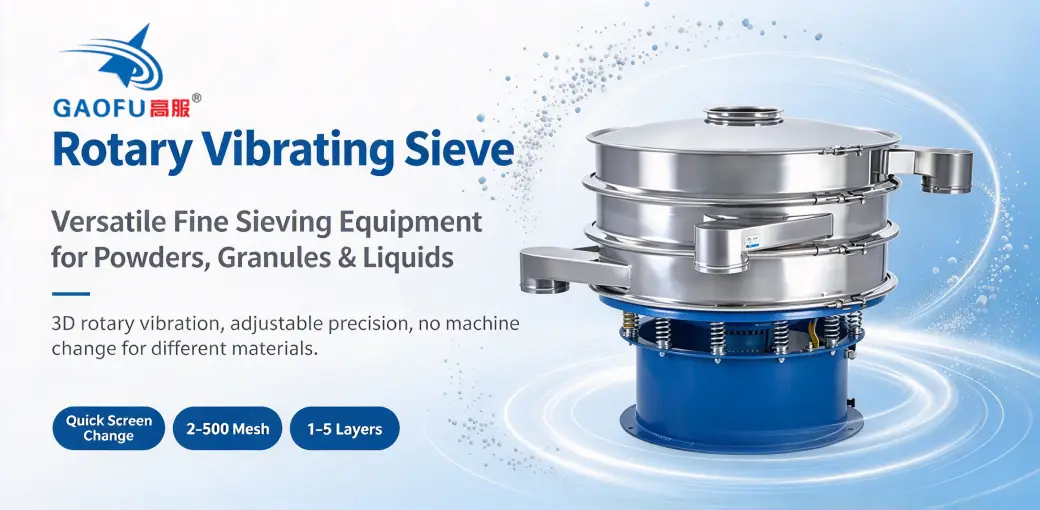
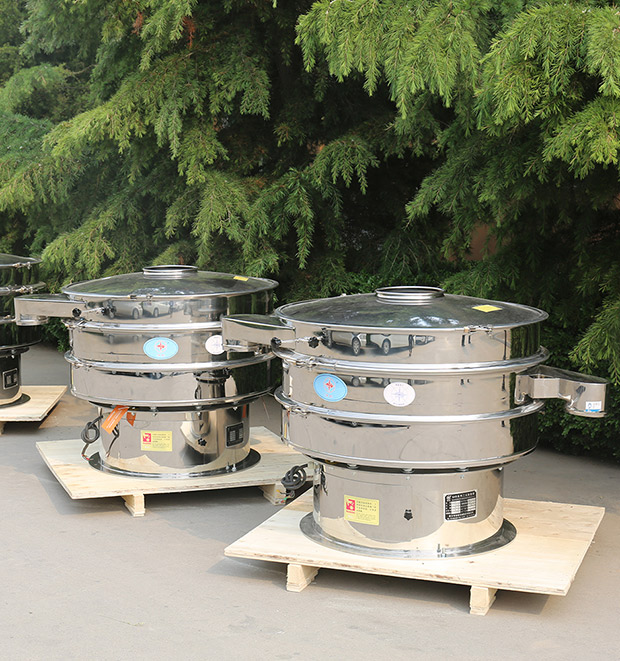
Gaofu Machinery's rotary vibratory sieve can be used for protein powder and other nutritional powder applications. With suitable screen configurations, the machine helps separate particles according to the required size range.
Key application benefits include:
The screen mesh opening can be selected based on product specifications and process requirements. This allows manufacturers to separate particles outside the desired size range and maintain better control over powder classification.
Larger agglomerates formed during processing can be separated when their size and physical properties are suitable for the selected screen mesh. This helps reduce the amount of oversized material entering subsequent production stages.
The actual separation performance depends on agglomerate strength, material properties, and screening conditions.
For applications requiring several particle-size ranges, a multi-layer screen arrangement can be considered. This allows the material to be classified into different fractions, providing additional flexibility for downstream processing or process adjustments.
Whey protein powder, plant-based protein powder, and blended protein powders can differ in particle shape, flowability, and moisture content. Screen specifications and equipment configurations should therefore be selected according to the characteristics of each material rather than applying one standard setup to every product.
Screening is one stage in protein powder production. Its main contribution is to help manage particle characteristics and provide better control over the powder before subsequent processing.
A properly configured rotary vibratory sieve can support protein powder manufacturing in several ways:
Improved particle-size consistency: Separates particles according to the selected mesh specifications, helping manufacturers manage particle-size distribution.
Reduced oversized agglomerates: Removes larger agglomerates that meet the separation criteria, helping reduce their potential impact on downstream processing and product preparation.
Support for downstream blending: Provides a more controlled powder condition for subsequent mixing and formulation operations.
A practical quality-control step: Establishes measurable screening specifications that can be incorporated into routine production quality management.
For manufacturers aiming to improve protein powder dispersion, screening should be considered alongside ingredient selection, formulation design, and other powder processing methods.
Comparative testing can help evaluate the relationship between particle size and product performance. Useful measurements may include dispersion time, visible lump formation, particle-size distribution, and solubility under defined test conditions.
Protein powder products vary in formulation and processing requirements. Equipment selection should therefore take material properties and actual production conditions into account.
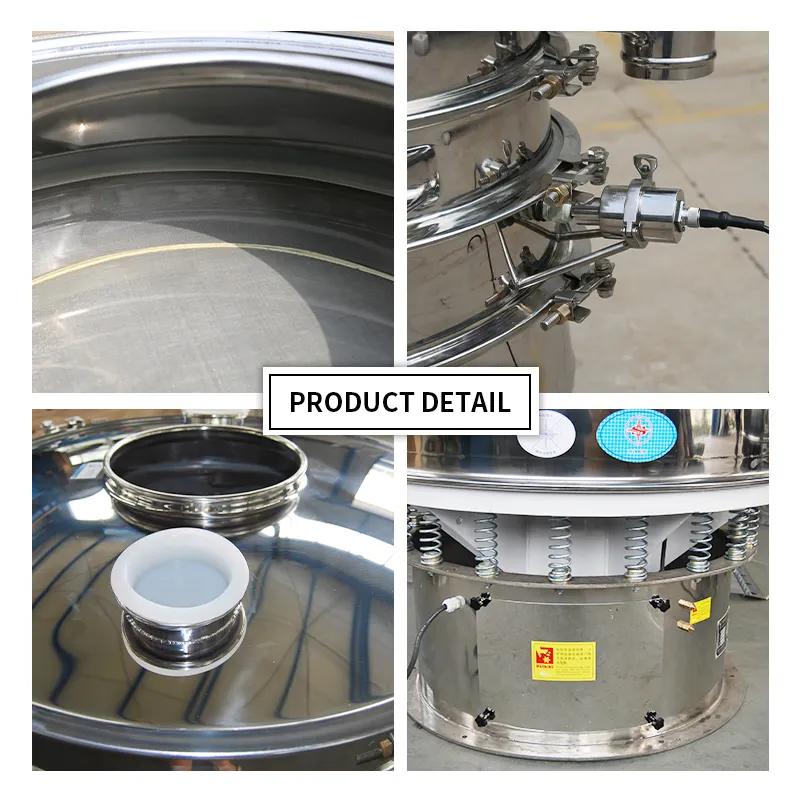
Gaofu Machinery's rotary vibratory sieve can be configured according to protein powder screening requirements, with options involving screen mesh specifications, number of screen layers, feeding and discharge arrangements, and auxiliary configurations.
During equipment selection, manufacturers should consider the following factors:
| Selection Factor | Key Considerations | |||
| Material type | Whey protein powder, plant-based protein powder, blended protein powder, and other nutritional powders | |||
| Particle-size requirements | Target particle-size range, mesh opening, and classification objectives | |||
| Agglomeration characteristics | Agglomerate size, strength, and material flowability | |||
| Processing requirements | Expected throughput, feeding method, and operating schedule | |||
| Screen configuration | Single-layer or multi-layer arrangement, mesh material, and installation method | |||
| Production line integration | Upstream and downstream connections, discharge method, and equipment layout |
For powders with a high fine-particle content or a greater tendency to cause screen blinding, auxiliary screen-cleaning devices may also be evaluated. The final equipment configuration should be determined according to material testing, process requirements, and site conditions.
If manufacturers want to improve the dispersion and solubility of finished protein powder, screening alone is generally not sufficient. Other aspects of the production process also need to be considered.
Ingredients and formulation
Protein sources, formulation components, and functional additives can influence the wetting, dispersion, and solubility characteristics of the finished powder.
Powder processing methods
Drying methods, particle morphology, and surface characteristics may affect how protein powder interacts with liquid.
Moisture control
Moisture content and storage conditions can influence powder flowability and the tendency to form agglomerates.
Screening process
Selecting suitable mesh specifications and operating conditions helps control particle-size distribution and separate oversized particles.
Finished-product testing
Particle-size analysis, dispersion testing, and solubility testing can provide useful data for evaluating product quality and refining processing conditions.
Coordinating screening with these other quality-control measures provides a more comprehensive approach to protein powder production.
The dispersion and solubility of protein powder depend on multiple factors, including formulation, ingredients, particle characteristics, and processing methods.
Although screening alone cannot determine the final solubility of a protein powder, fine particle classification and oversized agglomerate separation can support more consistent powder characteristics and provide better control over the production process.
Gaofu Machinery's rotary vibratory sieve is designed for protein powder and various nutritional powder screening applications. Equipment configurations can be selected according to material properties and production requirements, helping manufacturers manage particle-size classification as part of their powder processing operations.
If you are looking for screening equipment for protein powder classification, contact Gaofu Machinery. Share your material type, target particle size, and expected throughput with our team to discuss a rotary vibratory sieve configuration suited to your production needs.
Food Industry Client Testimonials
Nestlé, CP Group, Haitian Flavour & Fragrance, Yihai Kerry, Yili, Mengniu,Shuanghui, Wahaha, Master Kong, Want Want, Anjoy Foods, Angel Yeast,Yangyuan Foods, Uni-President Enterprises, Qiaqia Food, Luhua Group,Alpenliebe, Golden Monkey, Orion, Xizhilang,Sanquan Foods, Synear Food, Oishi, Wong Lo Kat, Yanjing Beer, Seamild,Jinpai, Chubang, Hengshun Vinegar Industry, Longda Group, Beijing Daoxiangcun, Anhe Dairy,Weiwei Group, Xiangpiaopiao, Maiquer, Tianbing, Binqi Food, Ligao Okun
Fortune 500 Client Testimonials
CNPC、CSCEC、Sinochem Holdings、CRCC、China Minmetals Corporation、CNOOC、CR、Sinopharm、CHN Energy、COFCO Corporation、Huawei Technologies、PowerChina、CITIC Group、Wuchan Zhongda Group、NORINCO、Chalco、CNBM、 Shaanxi Coal and Chemical Industry Group、Ansteel Group、CETC、CSSC、CASC、CEC、Jinchuan Group、CASIC、Conch Cement、CNNC、SPH、Shanxi Coking Coal Group、 Zhongtai Chemical、GPHL、DEC、Sinosteel Corporation、MCC、China National Salt Industry Chemical、China Baowu Steel Group、China Animal Husbandry Industry Co., Ltd.、CECEP
About Gaofu
Xinxiang Gaofu Machinery Co., Ltd. was founded back in the 1980s. With over 40 years of development, it has been certified as a National-level Specialized, Refined, Unique & Innovative Little Giant Enterprise, National Green Factory, National High-tech Enterprise, and National Intellectual Property Advantage Enterprise, and serves as the President Unit of China Vibration Screening Industry Association.
The company is accredited with the Henan Provincial Industrial Design Center, Henan Provincial Engineering Technology Research Center for Intelligent On-line Screening System, and Xinxiang Municipal Engineering Technology Research Center for Fine Screening.
Gaofu has obtained more than 500 patents including invention patents, utility model patents and design patents, been awarded the Science and Technology Achievement Prize issued by the Ministry of Industry and Information Technology of China, and participated in drafting and formulating 4 national standards.
Gaofu's product portfolio covers multiple series and hundreds of specifications, including vibrating screening equipment, conveying equipment, coal crushing equipment, filtration equipment and automatic material handling systems.
Core products include vibrating screens, screening machines, vibratory sifters, rotary vibrating screens, ultrasonic vibrating screens, linear vibrating screens, airflow screens, gyratory screens, roller screens, dewatering screens, bar screens, vacuum feeding machines, dust-free feeding stations, bulk bag feeding stations, feeding systems, automatic powder feeding systems, automatic slag-discharging filters, leaf filters, clay filters, toothed roll crushers, coal crushers and other machinery.
These products are widely applied in food, pharmaceutical, chemical, metallurgy, construction materials, mining, thermal power, environmental protection and many other industries, winning recognition and trust from over 10,000 clients worldwide.
Gaofu products enjoy strong sales across Greater China, and are exported to more than 100 countries and regions such as Russia, Canada, the United States, New Zealand, Japan, Brazil and South Africa.
Upholding the corporate mission of Improving material quality & efficiency to fully satisfy customer demands, Gaofu maintains long-term partnerships with clients to achieve win-win development.
At present, Gaofu is an official qualified supplier for numerous Fortune Global 500 enterprises, including CNPC, Sinopec, Sinochem Holdings, China Resources Group, Sinopharm Group, COFCO, China National Building Material, China Aerospace Science and Technology Corporation, Jinchuan Group and more.
Gaofu Machinery ranks No.1 in global sales volume of vibrating screens.
In May 2024, Frost & Sullivan, a world-renowned international consulting firm, issued a Market Position Verification Certificate confirming that Gaofu achieved the world's largest shipment volume of vibrating screens in the global market in 2023.