Over 10,000+ customers' choice, Focus on screening industry 40+ years
Issue 1: Flour Lumping
Flour has a certain degree of hygroscopicity during storage and transport. If big bags are not properly sealed or storage environment humidity is high, flour absorbs moisture from the air and forms lumps of varying sizes inside the bag. If these lumps cannot be effectively handled during discharge, the following consequences may occur:
Blocking the big bag discharge outlet, interrupting unloading;
Lumps entering subsequent processes, affecting dough uniformity and finished product texture;
Blocking screens during screening, reducing screening efficiency.
Issue 2: Material Bridging
Bridging occurs when material forms an arch structure inside the big bag or hopper, suspending material above the discharge outlet, preventing it from flowing out by gravity alone. Flour is lightweight and fine – after vibration and compression during transport inside the big bag, particles form a relatively compact structure, making bridging likely during discharge.
The direct consequence of bridging is discharge interruption – operators may think the material has been fully discharged, when in fact there is still a large quantity of flour suspended inside the bag. This not only wastes material but may also disrupt production schedules.
Issue 3: Dust Emission
Flour is a classic dust‑prone powder. During big bag unloading, if the equipment is not properly sealed or the dust collection system is not performing well, flour dust may escape from the feed opening, joint gaps, and other locations into the workshop air. Dust emission not only affects the workshop environment and employee health but also causes material loss and poses a dust explosion safety hazard.
Troubleshooting approach:
Step 1: Identify the source of lumps. Lumping is usually caused by two factors – excessive storage environment humidity or poor big bag sealing. Check whether the big bag storage location has moisture sources (such as water pipes, cleaning areas, etc.), and inspect whether the big bag packaging has damage or poor sealing.
Step 2: Assess the severity of lumps. Minor lumps (which can be broken by light finger pressure) can be handled by the feeding station's de‑agglomeration or screening function. Severe lumps (hard, solid masses) require pre‑treatment before feeding, or configuration of a more powerful de‑agglomeration device in the feeding station.
Countermeasures:
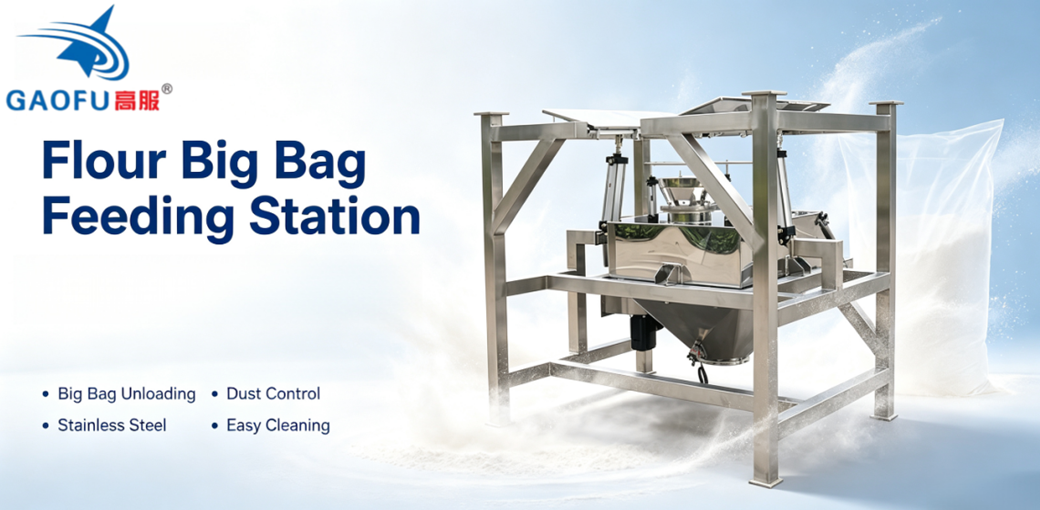
Configure tapping and vibration devices. Gaofu's big bag feeding station's tapping and vibration devices are not only effective against bridging but also assist in loosening lumps to some extent. The tapper rhythmically taps the side wall of the big bag, gradually loosening lumps through vibration.
In‑line screening module intercepts lumps. For large lumps that cannot be loosened inside the bag, the feeding station's built‑in vibrating screening module intercepts them during discharge. Qualified fine powder passes through the screen to the next process, while lumps and impurities are automatically discharged.
Optimise storage environment. Reduce lumping at the source – ensure big bags are stored in a dry, well‑ventilated environment, avoid direct ground contact (use pallets to elevate), and check big bag packaging integrity.
Troubleshooting approach:
Step 1: Identify the bridging location. Bridging can occur at two locations – inside the big bag (material forms an arch inside the bag) or inside the feeding station hopper (material bridges on the hopper wall). Identifying the specific location helps determine the cause and appropriate countermeasures.
Step 2: Check material flowability. Flour flowability is affected by fineness, moisture content, storage time, and other factors. If the same batch of flour repeatedly experiences bridging issues, consider whether the material's flowability has changed.
Step 3: Verify that auxiliary devices are operating properly. Check whether the tapping device and vibration device are functioning normally – whether air supply lines are clear, tapping frequency is appropriate, and vibration amplitude is sufficient.
Countermeasures:
Set tapping programmes appropriately. Gaofu's big bag feeding station tapping device can be PLC‑controlled for periodic tapping. The recommended tapping sequence is: tap the middle of the big bag first to loosen the material layer; then tap the bottom of the big bag to promote material flow toward the discharge outlet. Tapping frequency and intensity should be adjusted according to flour characteristics and the severity of bridging.
Vibration device assists bridging‑breaking. The vibrator integrated into the bag clamp can be activated as needed to generate high‑frequency micro‑vibration. Vibration combined with tapping effectively breaks material arches inside the big bag.
Configure bridging‑breaking devices. For particularly poorly flowing flour, a bridging‑breaking device can be added to the feeding station hopper section, using mechanical agitation or airflow disturbance to break material arches.
Adjust discharge speed. Excessively fast discharge speed may aggravate bridging. Slowing discharge speed slightly, allowing material more time to flow, can sometimes effectively relieve bridging issues.
Troubleshooting approach:
Step 1: Check sealing. The primary cause of dust emission is poor equipment sealing. Check whether the connection between the big bag discharge outlet and the equipment feed inlet is properly sealed – whether clamps are tightened, whether seals are aged or damaged. Check whether sealing strips at equipment interfaces, access doors, and inspection windows are intact.
Step 2: Check the dust collection system. If sealing is good but dust emission persists, the problem may lie with the dust collection system. Check whether the dust collection fan is running normally, whether filter elements need replacement or cleaning, and whether the pulse‑jet cleaning system is working properly.
Step 3: Check negative‑pressure status. The big bag feeding station controls dust through its negative‑pressure system. If negative pressure is insufficient, dust may escape through gaps. Check whether negative‑pressure piping is clear and whether fan power is adequate.
Countermeasures:
Ensure interface sealing is secure. After the big bag is hoisted into position, the bag's discharge spout must be firmly fitted into the equipment's dedicated bag clamp and compressed by the clamping plate. It is recommended to check the sealing status before each unloading operation and confirm it is correct before beginning discharge.
Perform regular maintenance on the dust collection system. Gaofu's big bag feeding station pulse‑jet baghouse filter requires regular maintenance – timely cleaning or replacement of filter elements, and checking whether the pulse‑jet cleaning system is operating normally. Filtration efficiency should be maintained above 99%, and emission concentration controlled below 10 mg/m³.
Maintain reasonable negative pressure. Keep the negative‑pressure dust collection system running throughout the entire unloading process – do not turn it off prematurely. Continuous operation of the negative‑pressure system is key to ensuring dust control.
Keep the feeding area clean. Regularly clean flour dust accumulation around the feeding station to avoid secondary dust emission. Keeping the feeding area clean also helps with early detection of sealing issues and dust emission points.
In addition to troubleshooting specific issues, routine preventive maintenance is equally important:
Establish an equipment inspection system. Check the condition of seals, clamps, dust collection systems, tapping devices, and other critical components before each use.
Standardise operating procedures. Develop standardised procedures for big bag hoisting, interface sealing, and unloading operations, and train operators to ensure every step complies with specifications.
Replace consumable parts regularly. Seals, filter elements, and other consumable parts should be replaced regularly according to usage frequency to avoid sealing failure and dust collection efficiency loss due to component ageing.
Record operating data. Record data for each unloading operation – duration, discharge performance, dust control effectiveness, etc. – to identify patterns and anticipate problems.
Food Industry Client Testimonials
Nestlé, CP Group, Haitian Flavour & Fragrance, Yihai Kerry, Yili, Mengniu,Shuanghui, Wahaha, Master Kong, Want Want, Anjoy Foods, Angel Yeast,Yangyuan Foods, Uni-President Enterprises, Qiaqia Food, Luhua Group,Alpenliebe, Golden Monkey, Orion, Xizhilang,Sanquan Foods, Synear Food, Oishi, Wong Lo Kat, Yanjing Beer, Seamild,Jinpai, Chubang, Hengshun Vinegar Industry, Longda Group, Beijing Daoxiangcun, Anhe Dairy,Weiwei Group, Xiangpiaopiao, Maiquer, Tianbing, Binqi Food, Ligao Okun
Fortune 500 Client Testimonials
CNPC、CSCEC、Sinochem Holdings、CRCC、China Minmetals Corporation、CNOOC、CR、Sinopharm、CHN Energy、COFCO Corporation、Huawei Technologies、PowerChina、CITIC Group、Wuchan Zhongda Group、NORINCO、Chalco、CNBM、 Shaanxi Coal and Chemical Industry Group、Ansteel Group、CETC、CSSC、CASC、CEC、Jinchuan Group、CASIC、Conch Cement、CNNC、SPH、Shanxi Coking Coal Group、 Zhongtai Chemical、GPHL、DEC、Sinosteel Corporation、MCC、China National Salt Industry Chemical、China Baowu Steel Group、China Animal Husbandry Industry Co., Ltd.、CECEP
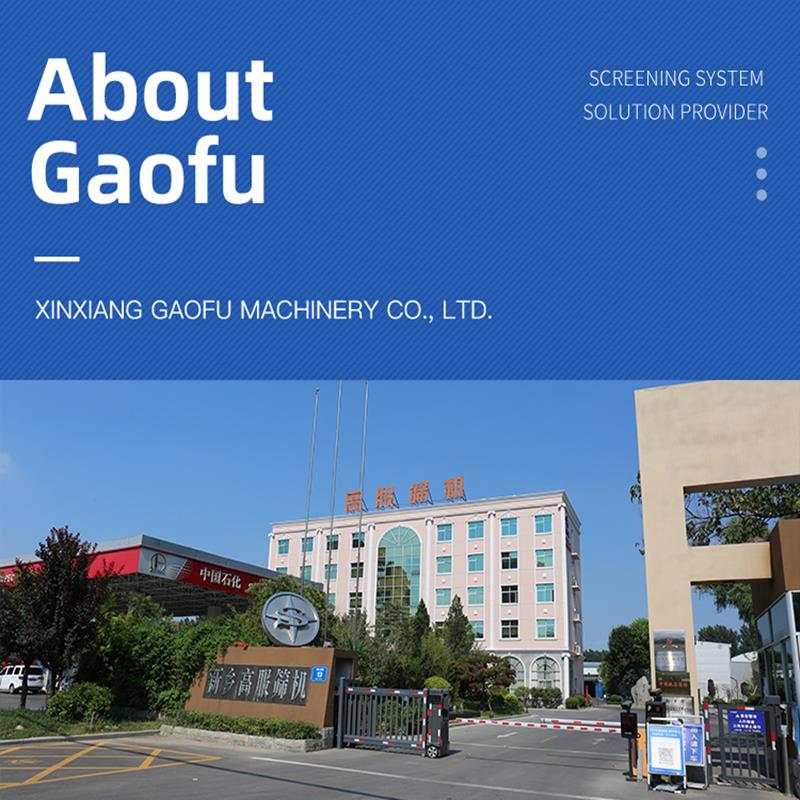
About Gaofu
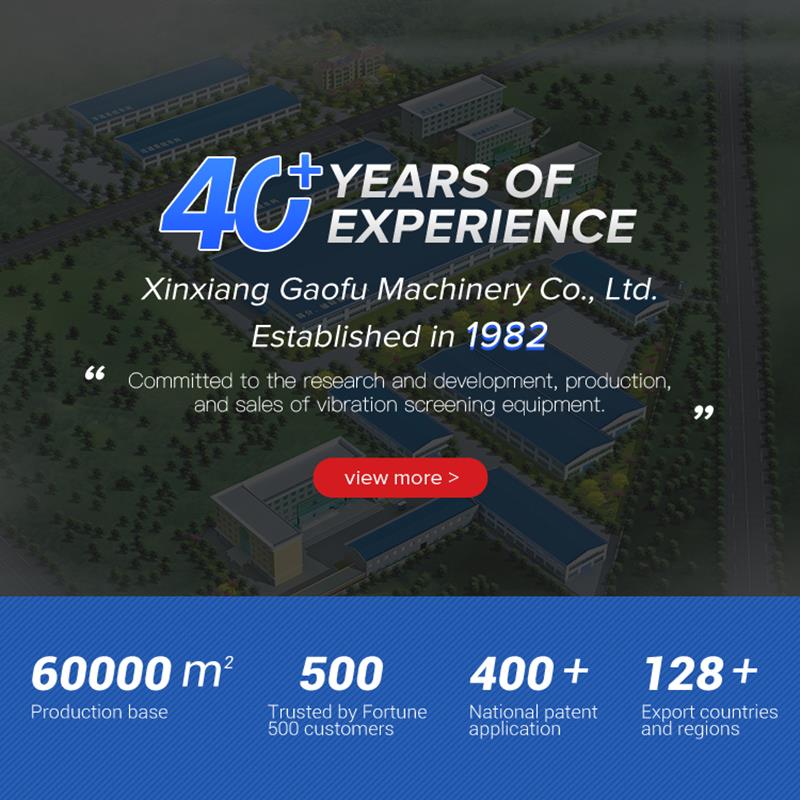
Xinxiang Gaofu Machinery Co., Ltd. was founded back in the 1980s. With over 40 years of development, it has been certified as a National-level Specialized, Refined, Unique & Innovative Little Giant Enterprise, National Green Factory, National High-tech Enterprise, and National Intellectual Property Advantage Enterprise, and serves as the President Unit of China Vibration Screening Industry Association.
The company is accredited with the Henan Provincial Industrial Design Center, Henan Provincial Engineering Technology Research Center for Intelligent On-line Screening System, and Xinxiang Municipal Engineering Technology Research Center for Fine Screening.
Gaofu has obtained more than 500 patents including invention patents, utility model patents and design patents, been awarded the Science and Technology Achievement Prize issued by the Ministry of Industry and Information Technology of China, and participated in drafting and formulating 4 national standards.
Gaofu's product portfolio covers multiple series and hundreds of specifications, including vibrating screening equipment, conveying equipment, coal crushing equipment, filtration equipment and automatic material handling systems.
Core products include vibrating screens, screening machines, vibratory sifters, rotary vibrating screens, ultrasonic vibrating screens, linear vibrating screens, airflow screens, gyratory screens, roller screens, dewatering screens, bar screens, vacuum feeding machines, dust-free feeding stations, bulk bag feeding stations, feeding systems, automatic powder feeding systems, automatic slag-discharging filters, leaf filters, clay filters, toothed roll crushers, coal crushers and other machinery.
These products are widely applied in food, pharmaceutical, chemical, metallurgy, construction materials, mining, thermal power, environmental protection and many other industries, winning recognition and trust from over 10,000 clients worldwide.
Gaofu products enjoy strong sales across Greater China, and are exported to more than 100 countries and regions such as Russia, Canada, the United States, New Zealand, Japan, Brazil and South Africa.
Upholding the corporate mission of Improving material quality & efficiency to fully satisfy customer demands, Gaofu maintains long-term partnerships with clients to achieve win-win development.
At present, Gaofu is an official qualified supplier for numerous Fortune Global 500 enterprises, including CNPC, Sinopec, Sinochem Holdings, China Resources Group, Sinopharm Group, COFCO, China National Building Material, China Aerospace Science and Technology Corporation, Jinchuan Group and more.
Gaofu Machinery ranks No.1 in global sales volume of vibrating screens.
In May 2024, Frost & Sullivan, a world-renowned international consulting firm, issued a Market Position Verification Certificate confirming that Gaofu achieved the world's largest shipment volume of vibrating screens in the global market in 2023.